
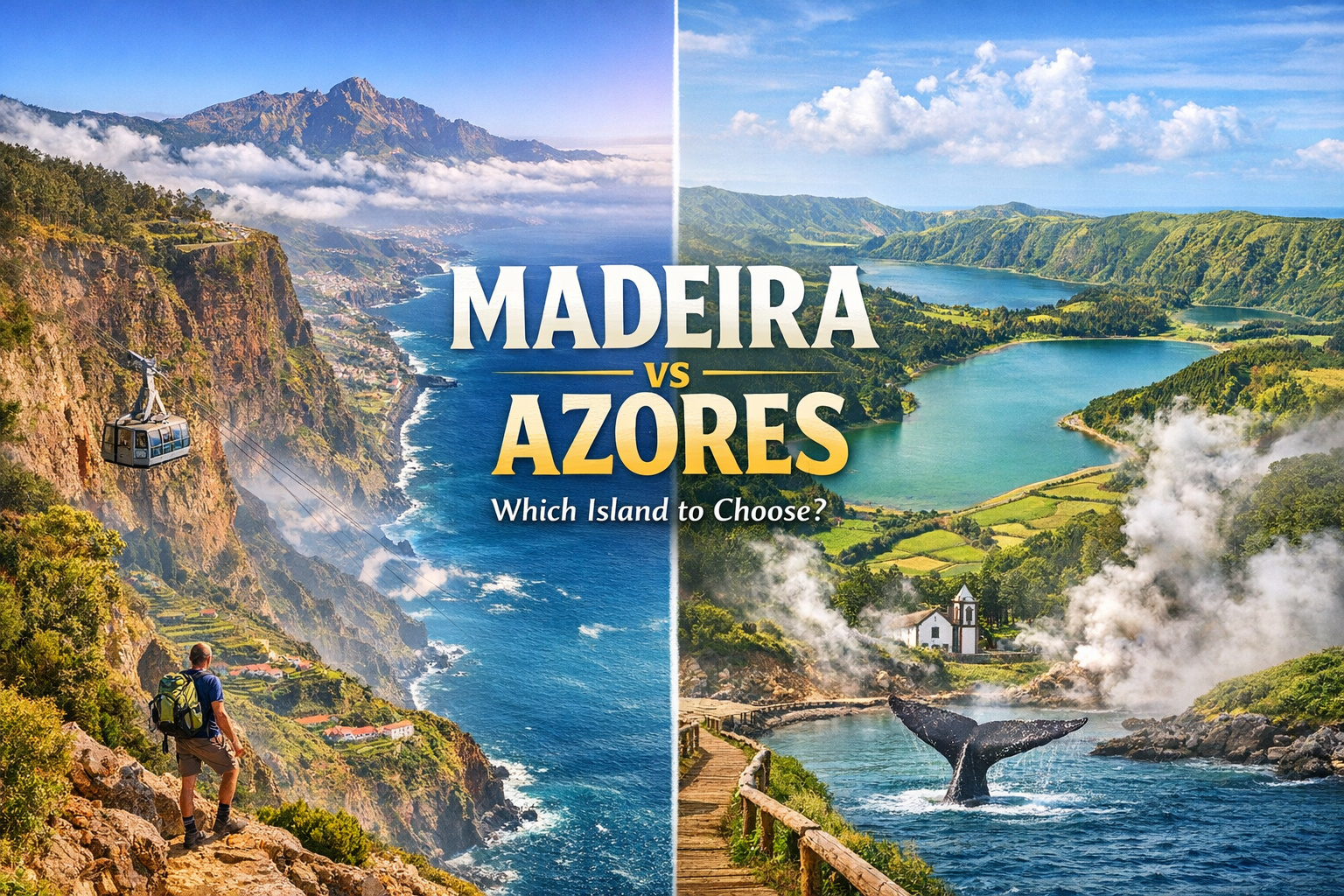
Portugal offers two of the most impressive island destinations in Europe: Madeira and the Azores.
Although they are often compared, the truth is that they deliver very different travel experiences in terms of climate, activities, logistics, and overall travel style.
For anyone undecided, this detailed comparison helps clarify which destination best matches the type of holiday being planned, avoiding unrealistic expectations.
Climate: stability vs unpredictability
Madeira
- Subtropical climate with high year-round stability
- Average temperatures between 17°C in winter and 25°C in summer
- Lower humidity compared to the Azores
- Fewer full days of rain
Madeira is often described as the “island of eternal spring”. This is a major advantage for travellers who book in advance and want reliable conditions for outdoor exploration. Even in winter, hiking, sightseeing, and outdoor activities are generally comfortable.
Azores
- Humid Atlantic climate with high variability
- Rapid weather changes throughout the day
- Higher frequency of rain and fog
- Generally cooler temperatures
In the Azores, especially on islands such as São Miguel, weather conditions can change several times in a single day. This can affect visibility at viewpoints and limit certain outdoor activities. On the other hand, this variability contributes to the islands’ extremely green and lush landscapes.
Conclusion
For those who value predictability and want to minimise weather risks, Madeira is clearly the safer choice.
Landscape: dramatic vs wild
Madeira
- Steep terrain with dramatic elevation changes
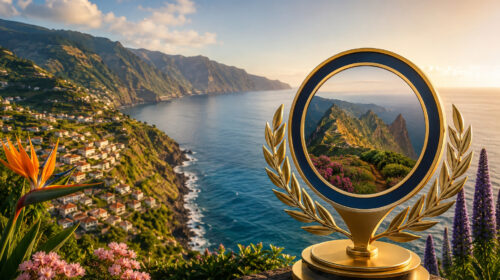
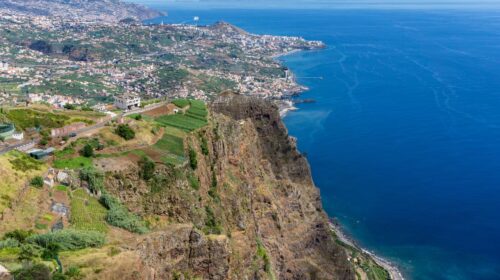
- Impressive cliffs such as Cabo Girão
- Mountain peaks such as Pico Ruivo
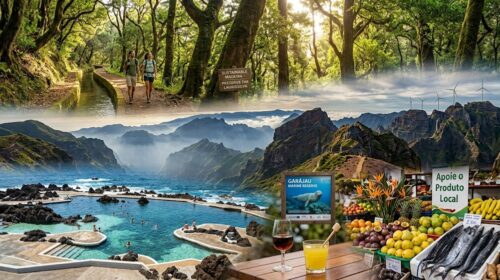
- Laurisilva forest classified by UNESCO
Madeira’s landscape is defined by the contrast between mountains and ocean. In just a few kilometres, travellers move from coastal areas to high mountain scenery with breathtaking views. Its diversity is one of the island’s strongest features.
Azores
- Strong volcanic origin
- Crater lakes such as Lagoa das Sete Cidades
- Vast green landscapes with minimal urbanisation
- Presence of geothermal activity
The Azores offer a more “raw” and untouched natural environment. The feeling of isolation and authenticity is stronger, making it highly appealing for those seeking direct contact with nature.
Conclusion
- Madeira → more scenic and varied landscapes
- Azores → more natural, wild, and immersive landscapes
Activities: accessible vs adventurous
Madeira
- Extensive network of well-marked levada walks
- Famous trails such as Levada das 25 Fontes
- Well-organised and easy-to-follow routes
- Activities such as cable cars, gardens, viewpoints, and city walks
Madeira is ideal for travellers who want to explore without complex logistics. Even those with limited hiking experience can enjoy most trails safely and comfortably.
Azores
- More natural and less structured hiking trails
- Whale and dolphin watching activities
- Unique experiences such as geothermal hot springs
- Strong sense of adventure and discovery
In the Azores, experiences tend to be more active and less guided. Many activities depend heavily on weather conditions, requiring flexibility in planning.
Conclusion
- Madeira → accessible and organised tourism
- Azores → more adventurous and spontaneous tourism
Ease of travel
Madeira
- One main island with good infrastructure
- Modern roads and tunnels for easy access
- Most highlights reachable within a few days
Logistics in Madeira are simple. With a rental car, visitors can easily explore the main attractions without major complications.

Azores
- Archipelago made up of 9 islands
- Requires internal flights or ferries
- More complex planning and scheduling
Travelling in the Azores requires more organisation, especially for those wanting to visit multiple islands. This can increase both cost and travel time.
Conclusion
Madeira is clearly more practical for short or uncomplicated trips.
Beaches and sea
Madeira
- Mostly pebble beaches
- Some artificial sandy beaches
- Natural swimming pools such as Porto Moniz
Although not a classic beach destination, Madeira offers alternative bathing experiences, especially in its volcanic natural pools.
Azores
- Black volcanic sand beaches
- Cooler ocean waters
- Rougher sea conditions
In the Azores, the beach experience is more rugged and less developed for mass tourism.
Conclusion
Neither destination is ideal for traditional tropical beach holidays.
Gastronomy
Madeira
- Signature dishes such as beef skewers on laurel sticks
- “Bolo do caco” garlic bread
- Black scabbardfish with banana
- Strong wine tradition
Madeiran cuisine is simple but consistent and well adapted to tourism.
Azores
- Furnas stew cooked underground using volcanic heat
- High-quality regional cheeses
- Local products such as pineapple and tea
In the Azores, gastronomy is more closely tied to land-based traditions and agriculture.
Conclusion
Both destinations offer excellent food, but with very different identities.

Prices
- Madeira: higher tourism demand → slightly more expensive
- Azores: potentially cheaper, but depends on island and logistics
Price differences are not extreme but can become relevant, especially in the Azores due to inter-island travel.
Who is each destination for?
Choose Madeira if:
- A stable climate is preferred
- A simple, stress-free trip is desired
- Many places are to be visited in a short time
- Comfort and infrastructure matter
Choose the Azores if:
- More untouched nature is preferred
- Weather variability is acceptable
- Adventure and unique experiences are desired
- A quieter, less touristy trip is preferred
Final conclusion
The choice between Madeira and Azores depends entirely on the type of experience being sought.
Madeira stands out for its predictability, accessibility, and concentrated diversity.
The Azores offer a more authentic, natural, and unpredictable experience.
For a first visit, Madeira is generally the more balanced option.
For experienced travellers seeking something different, the Azores may offer a more surprising experience.