

There exists a particular species of traveler who breaks out in hives at the mere mention of an all-inclusive resort. Sand in the sandwiches, the relentless thump of poolside reggaeton, the slow cooking of pale tourist flesh on plastic loungers – none of it sparks joy.
If this sounds uncomfortably familiar, congratulations: Madeira has been quietly waiting for you, somewhere out in the Atlantic, sharpening its cliffs and brewing its mist.
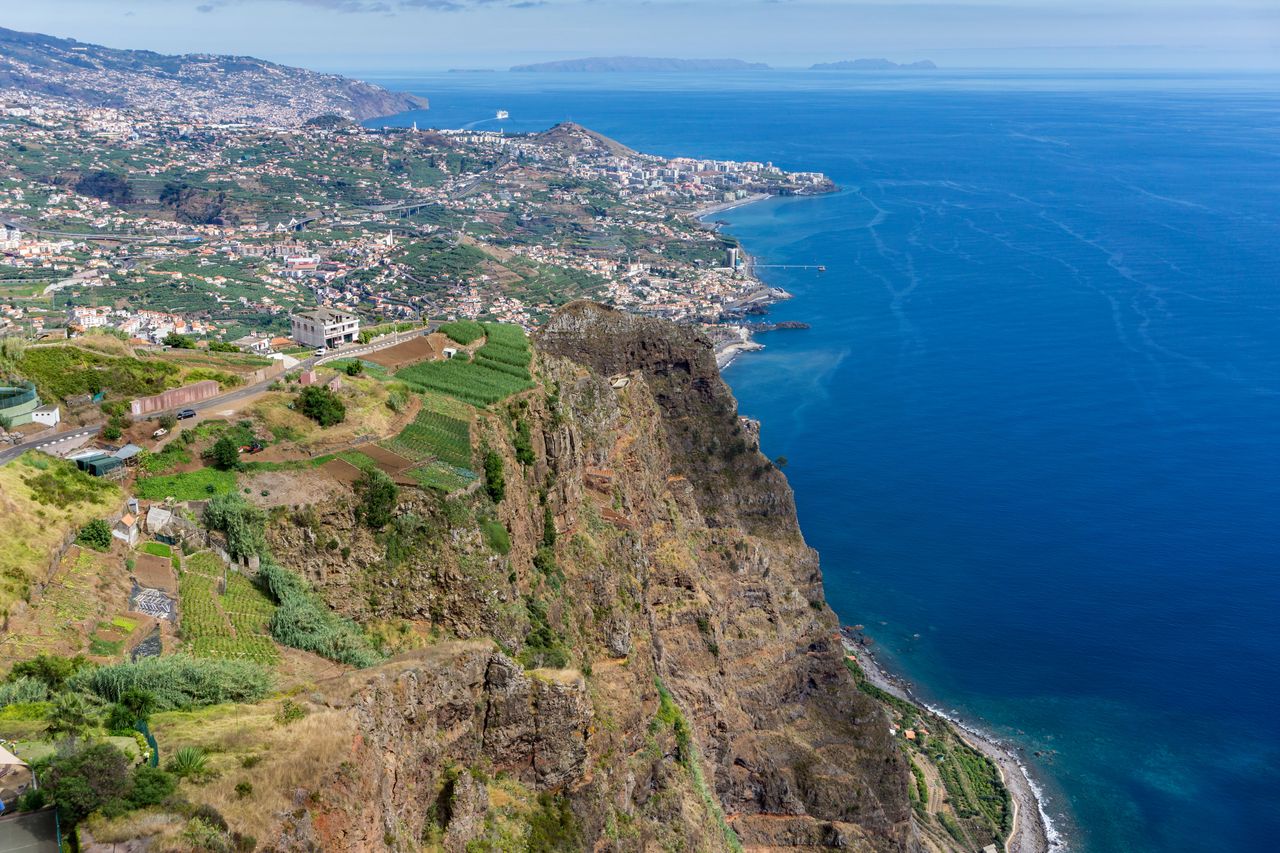
This Portuguese island doesn’t really do the standard sunbed shuffle, and frankly, it never apologized for it. The coastline is mostly volcanic rock that looks like it lost a fight with the ocean.
The handful of sandy beaches that do exist were largely imported from Morocco, which feels almost like cheating.
What Madeira offers instead is something far stranger and more rewarding – a vertical playground where the weather changes every fifteen minutes and the laurel trees remember the dinosaurs.
The Island That Refuses to Lie Flat
Madeira was born from underwater volcanoes throwing a long, dramatic tantrum, and the result is a landscape that has very little patience with the concept of “flat”. Roads tunnel through mountains because going around them would take a week.
Villages cling to slopes at angles that defy basic physics. Even the cows, historically speaking, were kept in tiny triangular sheds because the island simply ran out of horizontal space.
For someone who finds beach holidays roughly as thrilling as watching paint dry , this geographical stubbornness is excellent news. Every direction leads upward, downward, or into a ravine you didn’t notice was there.
The island measures only about 57 kilometers across, but ask any local and they’ll tell you the actual surface area, if you ironed it out, would probably swallow half of Portugal.
Levadas: Walking on Water (Almost)
Centuries ago, Madeirans realized that the rainy north had water and the sunny south had thirsty crops, and somebody very stubborn decided to fix this by carving irrigation channels into the cliffs.
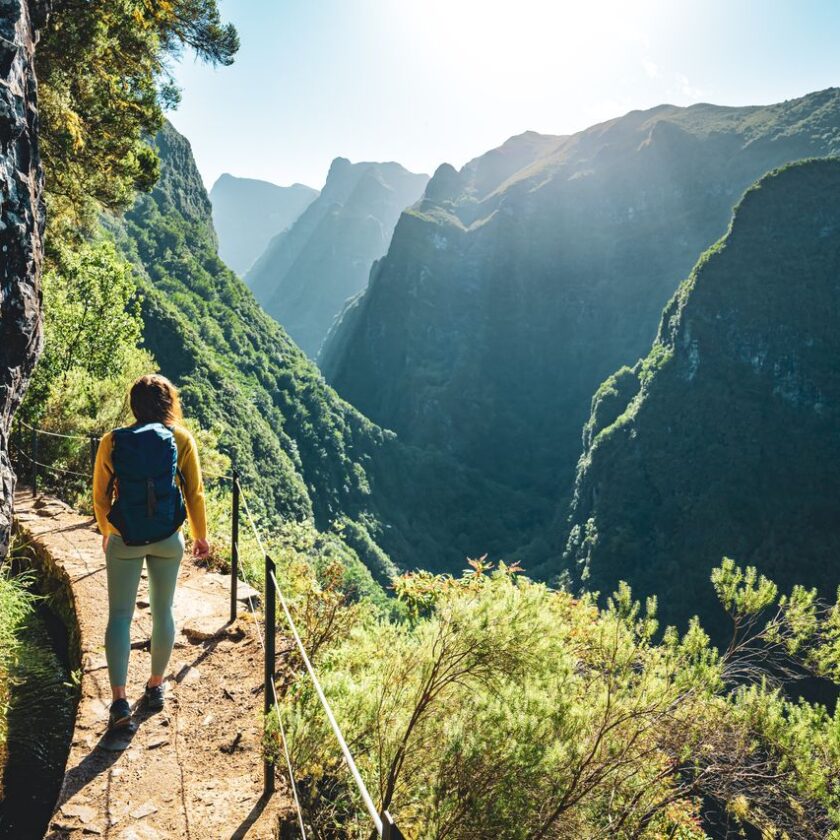
The result is over 2,500 kilometers of levadas – narrow stone canals that snake across the island, each one followed by a maintenance path that has since been adopted by hikers with better boots and worse vertigo.
Walking a levada is the antithesis of a beach holiday. You move at a contemplative pace, water gurgling beside you, ferns brushing your shoulder, the occasional waterfall demanding you duck through it like some kind of damp ceremony.
Some routes are gentle enough for a grandmother in espadrilles. Others involve walking on a narrow ledge above a 300-meter drop with only a slightly worried-looking handrail between you and the void.
A few worth mentioning, depending on your tolerance for moisture and exposure:
- Levada do Caldeirão Verde – emerald pools, dripping tunnels, requires a flashlight and a sense of humor
- Levada das 25 Fontes – twenty-five springs feeding into one obnoxiously photogenic lagoon
- Levada do Rei – quieter, mossier, the kind of trail where you might start composing bad poetry
- Vereda do Larano – technically not a levada, but it walks along sea cliffs that look painted
Pico Ruivo and the Ridge Above the Clouds
The third-highest peak on the island, Pico Ruivo, stands at 1,862 meters and is reached by what might be the most cinematic walk in the Atlantic.
The traverse from Pico do Areeiro is a sequence of carved stone staircases, tunnels punched straight through volcanic rock, and ridgelines so narrow that on either side the world simply falls away into cotton-wool cloud.
People who came to Madeira expecting a quiet wine tasting and a nap have been known to find themselves up here at sunrise, slightly out of breath, slightly emotional, wondering how they ended up above the weather. It happens. The island has a habit of rearranging people’s plans.
Cable Cars, Wicker Sleds, and Other Inadvisable Inventions
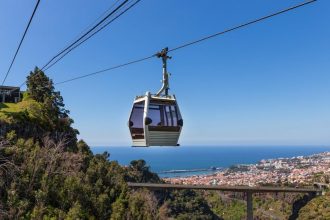
The teleférico from Funchal to Monte is a perfectly civilized way to climb 560 meters above the capital while sipping nothing in particular.
The view is the standard postcard: red rooftops tumbling toward a navy harbor, cruise ships looking like bath toys, the whole city laid out like a tray of pastries.
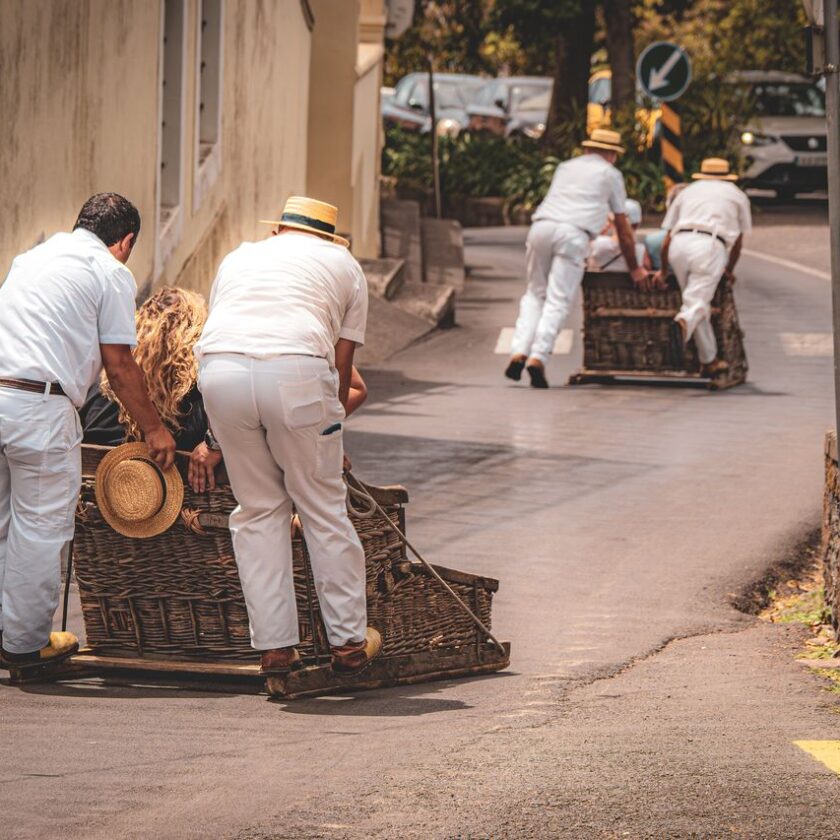
The descent, however, is where things get interesting. Since 1850, Monte has offered a transport option known as the carros de cesto – wicker baskets on wooden runners, pushed and steered down a steep public road by two men in straw hats and white uniforms.
They call it a sledge ride. It is not. It’s a controlled fall through a residential neighborhood at speeds that, on a good day, reach 38 kilometers per hour. Hemingway allegedly tried it and called it one of the most exhilarating experiences of his life, although he said that about a lot of things.
Other cable cars worth riding include the one to Fajã dos Padres, dropping nearly vertically down a 300-meter cliff to a tiny settlement where banana trees and grapevines grow in the spray of the Atlantic.
There’s also the cable car to Achadas da Cruz, in the far west, where almost nobody goes and the silence has texture.
Viewpoints That Make You Forget to Breathe
Madeira treats viewpoints – miradouros – the way other places treat traffic lights. They are everywhere, often without warning, sometimes barely signposted.
The drama varies, but the ratio of scenery to effort is suspiciously generous.
- Cabo Girão – a glass-floored skywalk perched on one of the highest sea cliffs in Europe, 580 meters straight down to vegetable gardens that should not exist
- Miradouro do Guindaste – two metal balconies bolted onto a cliff face for reasons known only to engineers
- Pico dos Barcelos – sunset over Funchal, with the obligatory grandmother selling poncha
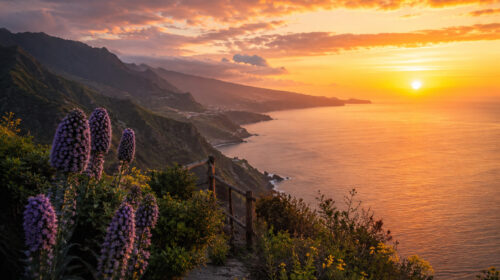
- Vereda da Ponta de São Lourenço – the eastern tip, where the island finally runs out of green and turns Martian red
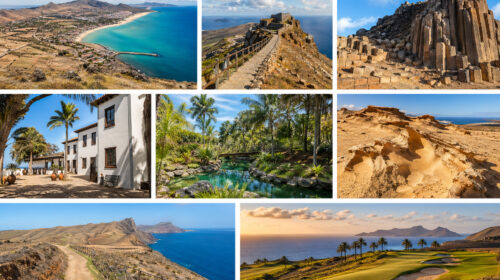
The Ponta de São Lourenço in particular is an oddity. After spending days in the dripping laurel forest of the interior, the eastern peninsula appears like a continuity error. Bare ochre rock, brutal wind, sea on three sides, no trees, no shade, no nonsense.
It looks like the set designer ran out of budget and just left the volcanic geology to fend for itself.
The Forest That Time Forgot
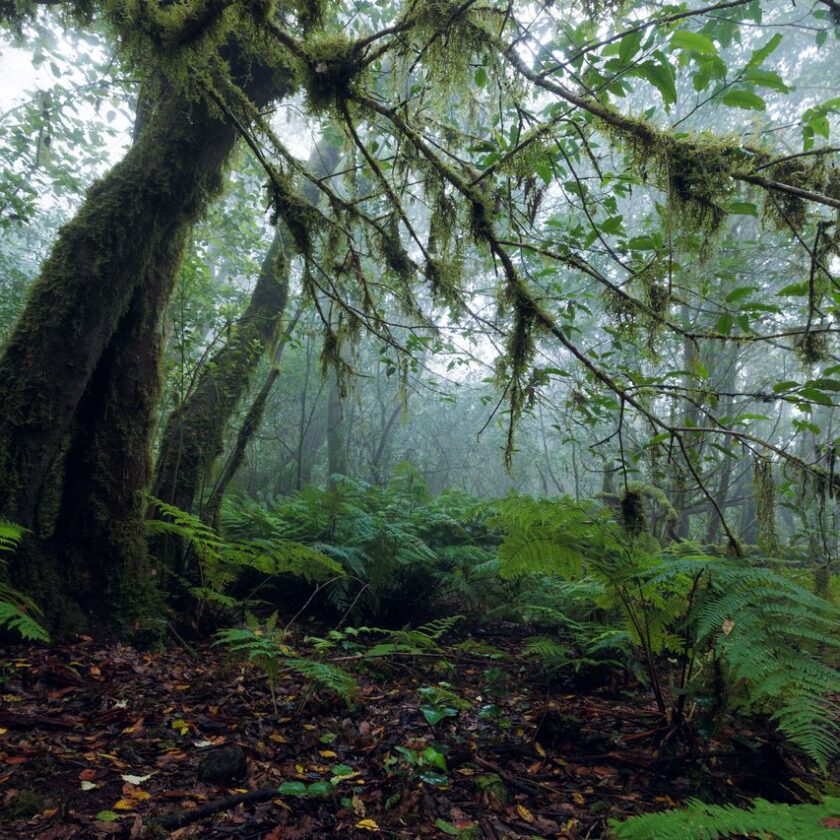
Up in the central plateau, the Laurissilva forest does its quiet UNESCO-listed work. This is one of the last surviving fragments of the laurel forest that once covered much of southern Europe several million years ago, before the ice ages decided to redecorate the continent.
Walking through it feels less like hiking and more like trespassing on a stage set someone forgot to dismantle.
The trees are gnarled, mossy, and quietly ancient. Mist drifts between them in slow theatrical sweeps. Occasionally a Trocaz pigeon – a species that lives nowhere else on the planet – flaps overhead with what sounds like passive aggression.
There are no beaches here. There is no Wi-Fi. There is, however, the persistent feeling that something prehistoric is watching, possibly with mild approval.
Ocean Cliffs Without the Sand
For those who still want their dose of salt water without committing to a towel-and-umbrella situation, Madeira’s coast offers natural swimming pools carved by lava. Porto Moniz is the famous one, with crystalline volcanic basins where the Atlantic refills itself constantly.
Seixal has a smaller, blacker, more dramatic version. Both are spectacular, neither involves sand in unfortunate places.
The northern coast is also where the waterfalls do their thing. The infamous Cascata dos Anjos drops directly onto the old coastal road, which means you can – and people do – drive a rental car straight through a waterfall, emerging on the other side slightly cleaner than they started.
Practical Notes for the Anti-Beach Brigade
Madeira’s microclimates are aggressive. It can be raining sideways at 1,500 meters while sunbathers in Funchal are ordering a third espresso. Bring layers. Bring waterproofs. Bring shoes that have opinions about grip.
Public buses exist and are charming, but they were not designed for travelers trying to chain together three trailheads and a viewpoint in a single day. Many of the best routes start in inconvenient places and end in even less convenient ones.
This is where guided options earn their keep, and exploring Madeira adventure tours through services like Excurzilla can save a great deal of map-staring and timetable-cursing.
Pack a headlamp – those levada tunnels are not metaphorical, they are pitch black and sometimes ankle-deep in cold water. Pack a swimsuit anyway, because every now and then a hike ends at a pool too inviting to refuse.
And pack patience for the weather, which on Madeira is less a forecast and more a suggestion that the island reserves the right to ignore.
This is not a destination for people who want to be sedated by sunshine. It’s for those who’d rather come home with scratched knees, mud on the rental car, and the slightly unhinged look of someone who spent their holiday walking sideways along a cliff.
Which, as it turns out, is a much better story than another tan.
![Madeira Jeep Tours [year]](https://www.madeira-holidays.eu/wp-content/uploads/2013/10/madeira-jeep-tour-330x220.jpeg "Madeira Jeep Tours [year] in Activities")


