

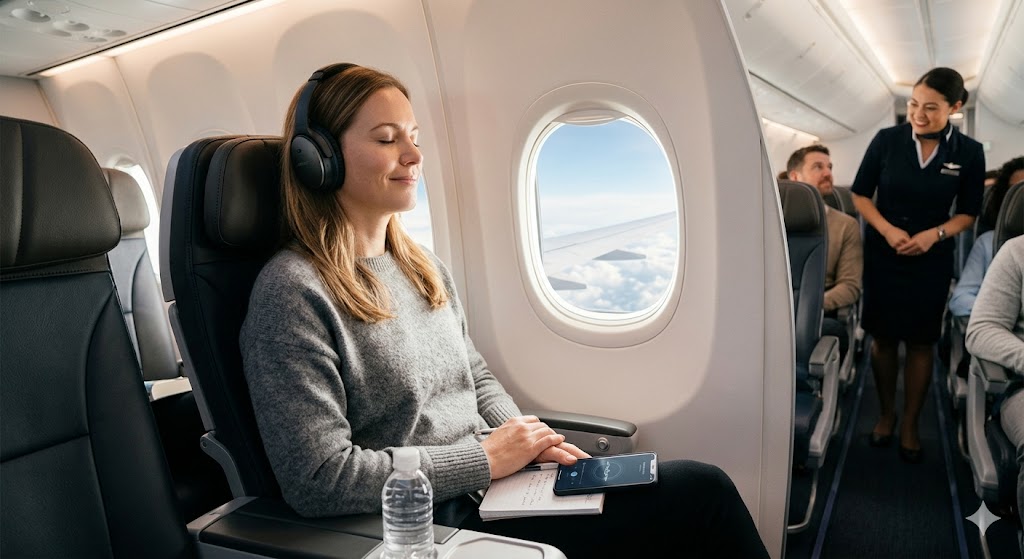
For many, boarding a plane is the start of an unforgettable adventure. For others, however, the mere sound of the engines is enough to make their heart race.
If you feel a “tightness in your chest” just thinking about takeoff, know that you are not alone: aerophobia affects a significant portion of the population.
The good news is that the fear of flying can be managed and even overcome. Here are the fundamental strategies to transform your next flight into a much more serene experience.
1. Know Your “Enemy” (Science on Your Side)
Fear thrives on the unknown. When the plane shakes a bit, our minds project disaster scenarios, but the reality is purely physical:
- Turbulence is normal: Think of the air as a cobblestone road. Just as a car vibrates when passing over bumps, the plane reacts to air currents. It is uncomfortable, but it is not dangerous.
- The safest way to travel: It’s a cliché, but the numbers don’t lie. It is statistically much safer to travel by plane than to drive to the airport.
- Rigorous maintenance: Airplanes are redundant machines. If one system fails, there is always another (or two) to take its place.
2. Choose Your Seat Strategically
If the sensation of movement bothers you, where you sit makes all the difference:
- Over the wings: This is the plane’s center of gravity, where stability is highest and you feel oscillations the least.
- The aisle: If you feel claustrophobic, the aisle gives you a greater sense of freedom and prevents you from having to look out the window constantly.
3. Control Your Physiology
Your body reacts to fear by releasing adrenaline. You can “trick” your nervous system with simple techniques:
- Diaphragmatic breathing: Inhale through your nose for a count of four, hold for two seconds, and exhale slowly through your mouth for six seconds. This tells your brain that everything is okay.
- Avoid caffeine and alcohol: Coffee increases anxiety, and while alcohol might seem to relax you initially, it can cause dehydration and increase the sense of panic during the flight. Opt for water or relaxing herbal teas.
4. Create a “Distraction Bubble”
Don’t just sit there listening to every noise the plane makes. Prepare your entertainment in advance:
- Podcasts or Audiobooks: These are excellent because they force you to focus on a narrative.
- Noise-canceling headphones: Investing in this technology is a game-changer for maintaining silence and calm.
- The 5-4-3-2-1 rule: If anxiety rises, focus on 5 things you see, 4 you can touch, 3 you hear, and 2 you smell. This brings you back to the present moment.
5. Communicate with the Crew
Flight attendants are professionals trained to handle anxious passengers. Don’t be ashamed to tell them, when boarding, that you feel nervous. They will make an extra effort to reassure you and explain any sound or procedure that makes you uncomfortable.
6. Master the Moment of Takeoff
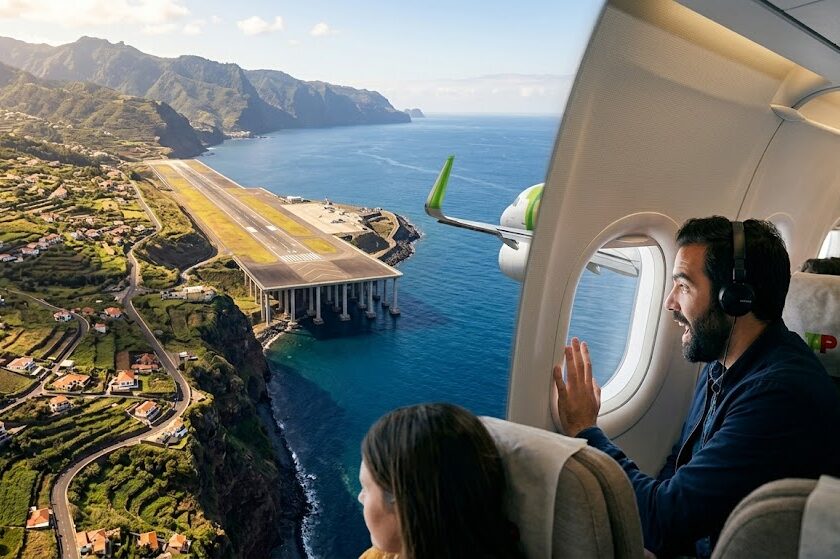
For many, this is the highest point of tension. The sensation of being “pushed” into your seat can be intimidating. Try to view this as the power necessary to take you to your destination. A useful tip is to lift your feet slightly off the floor during the climb; this reduces the perception of aircraft vibrations in your body, making the ascent feel smoother.
7. Focus on the Destination, Not the Journey
Often, fear arises because we are obsessed with the technical “what ifs.” Try to shift your focus. Instead of thinking about wing mechanics, close your eyes and visualize what you will do as soon as you land. Imagine the weather, the first meal you’ll have, or the hug from someone waiting for you. Keeping the “why” of the trip alive helps devalue the discomfort of the “how.”
8. Use Technology to Your Advantage
There are apps specifically designed for those with a fear of flying. Some explain the noises you are hearing in real-time or show the turbulence forecast for your specific route. Having factual information in the palm of your hand helps ensure you don’t rely solely on your imagination.
9. The Writing Trick (Non-Dominant Hand)
If you feel panic rising, grab a notepad and try to write your full name repeatedly using your non-dominant hand (if you are right-handed, use your left). This exercise forces your brain to focus intensely on a complex motor task, momentarily “switching off” the circuits of irrational anxiety.
10. Celebrate Small Victories and Seek Expert Help
Every flight you complete is resilience training. When you get off the plane, acknowledge your merit for facing the discomfort. This positive validation helps reprogram the brain for the next trip. If you feel your fear is paralyzing, consider taking a “Fear of Flying” course, often offered by airlines with the support of pilots and psychologists.
Frequently Asked Questions (FAQs)
What causes turbulence? Turbulence is caused by changes in airflow, such as wind shear, jet streams, or heat rising from the ground. It is exactly like waves in the ocean or bumps on a road; the plane is designed to withstand forces much greater than any turbulence can provide.
Can an airplane fly if an engine fails? Yes. All commercial aircraft are capable of flying safely and landing with only one functioning engine. Even in the extremely rare event that all engines stop, a plane does not “fall out of the sky”; it becomes a glider and can remain airborne for a significant distance to find a place to land.
What is that loud “clunk” sound right after takeoff? That is simply the landing gear being retracted and the bay doors closing. It is a sign that the flight is proceeding exactly as it should.
Is the air inside the plane clean? Absolutely. Most modern planes use HEPA filters, which are the same grade as those used in hospital operating rooms. These filters capture 99.9% of bacteria and viruses, and the air in the cabin is completely refreshed every few minutes.
Why do my ears pop? This happens due to the change in air pressure as the plane climbs or descends. It’s perfectly normal. Chewing gum, swallowing, or yawning usually helps balance the pressure instantly.
Conclusion Controlling fear doesn’t happen overnight, but every flight is an opportunity to prove to yourself that you are capable. Remember: the final destination is always worth the effort of facing the clouds.
Safe travels!