

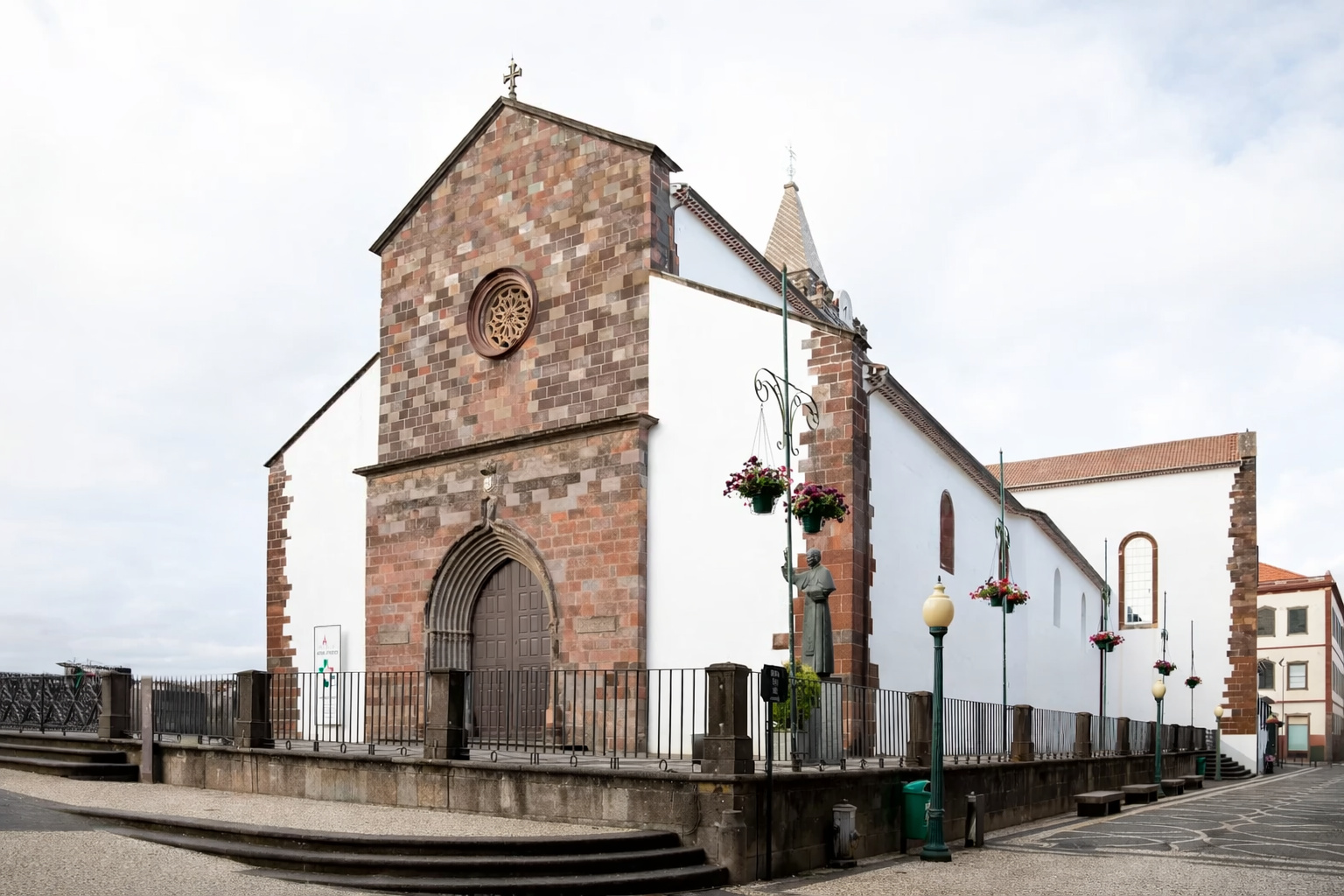
Sé is the abbreviation for Sedes Episcopalis (Episcopal Headquarters). Construction of the Sé Cathedral began in 1493 by order of, and, on land donated by King Manuel I.
Completed in 1514 the Sé Cathedral was consecrated in 1517 by Bishop Duarte as the spire of the bell tower and a few additional details were finalized in 1517-1518.
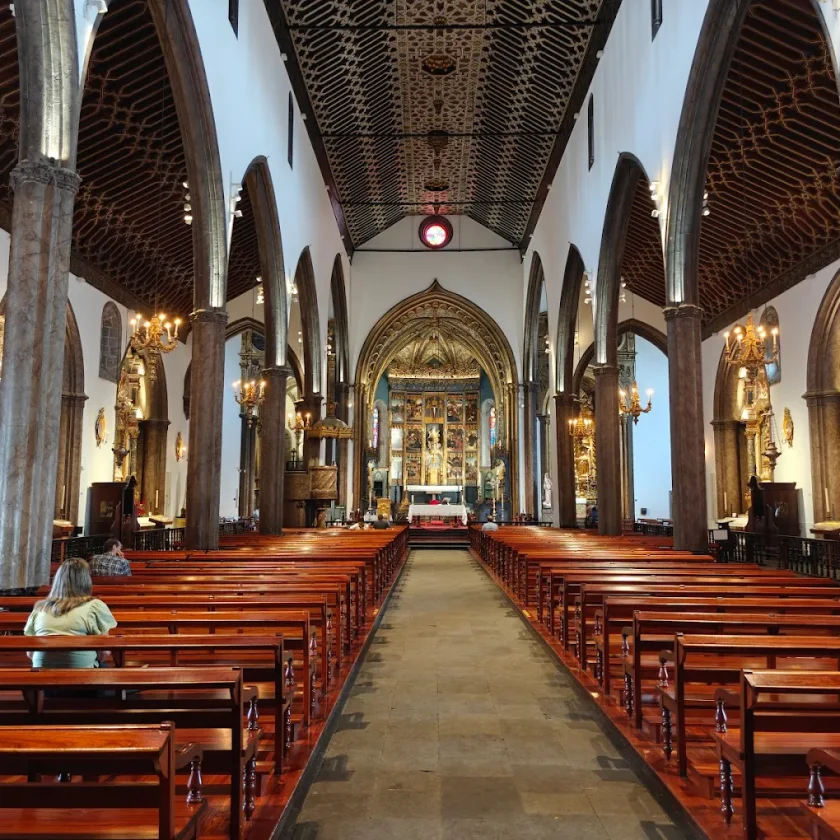
Contrary to the simple exterior of this gothic style building, the interior is quite impressive, a true architectural phenomenon.
Funchal´s Cathedral
The ceiling of the chancel is lined in native wood, ivory inlays, decorated in Mudejar style – oriental ornaments and motifs used in the Christianized Moors on the Iberian Peninsula.
The various pieces of gilt highlight the architectural features of the manueline period, which meant a time of great progress and prosperity for Madeira.
Since 1955, a few pieces of art , from the Cathedral that were gifts from D.Manuel I , referred today as the “Treasures of the Cathedral”, may now on display at the Museum of Sacred Art. Such pieces include a baptismal fountain, the altar and the pulpit.
The opening to the chancel is defined by a triumphal arch. Here you will find many works of art made by hand in the form of tables and chairs that are divided into two rows.
The backs are decorated with images of apostles and prophets, without neglecting the arms of the chairs which are crafted to the smallest detail with influences from the Middle Ages.
Funchal’s Cathedral, commonly known as the Sé, is one of Madeira’s most important historical and religious landmarks. Built at the end of the 15th century, it is a fine example of Portuguese Gothic architecture with Manueline influences, reflecting the island’s early prosperity during the Age of Discoveries.
History and significance
Construction of the cathedral began in 1493 and was completed in 1514. It quickly became the main religious centre of Madeira and played a key role in the social and spiritual life of Funchal. Its location in the historic centre highlights its long-standing importance to the city.
Architecture and interior
From the outside, the Sé Cathedral is characterised by its sober stone façade and distinctive tower. Inside, the space reveals remarkable details, including:
- A richly carved wooden ceiling made from local woods, considered one of the finest of its kind in Portugal
- Manueline stonework reflecting maritime motifs
- Religious artworks and furnishings dating back several centuries
The contrast between the modest exterior and the ornate interior is one of the cathedral’s most striking features.
Visiting today
Today, Funchal’s Cathedral remains an active place of worship and a key point of interest for visitors exploring the city. It is often included in walking routes through the historic centre and is valued not only for its religious role, but also for its cultural and architectural heritage.
Why it matters
The Sé Cathedral stands as a symbol of Madeira’s history, linking the island’s religious traditions with its maritime past. It offers visitors a deeper understanding of Funchal’s origins and remains a must-see landmark for anyone interested in history, architecture or local culture.



Definitely worth a quick visit when in Funchal.
Loved the wooden ceiling and quiet atmosphere.
Simple from the outside, stunning on the inside.
Felt a deep sense of tradition and heritage.